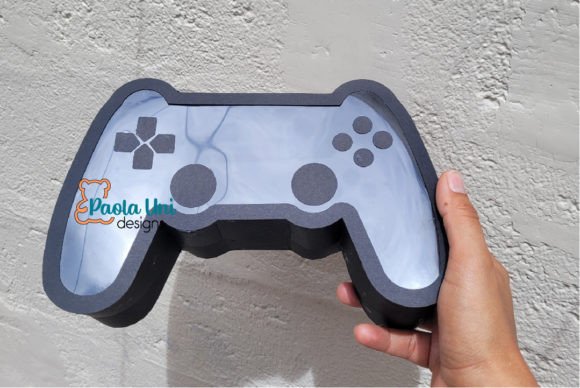
Reviewing the Joystick Box SVG for Embroidery
As a designer who spends half my life staring at digitized files and the other half pulling bobbins out of tangled messes, I have learned to be skeptical of cute concepts. We all love a retro gaming vibe, but translating that aesthetic into thread requires more than just a pretty picture. Recently, I took a close look at the Joystick Box SVG Cricut English and Spanish to see if it holds up under the needle. This isn’t just about whether it looks good on a screen; it is about how it behaves when you are trying to meet a deadline for a custom order or stock your Etsy shop with unique, handmade items.
First Impressions: Nostalgia Meets Structure
The immediate appeal of this design lies in its clean, geometric personality. It taps into that universal nostalgia for arcade cabinets and early console controllers without feeling dated or cluttered. From a layout perspective, the Shapes category listing makes sense because the design relies heavily on strong lines and defined blocks. When I first opened the file, I was looking for potential trouble spots—areas where satin stitches might bridge too far or where tiny details could get lost in the fabric texture.
The visual mood is playful yet structured. It feels right at home on modern streetwear or minimalist home decor. For an embroidery project, this balance is crucial. If a design is too busy, it overwhelms the garment; if it is too simple, it lacks value. This joystick box strikes a nice middle ground, offering enough detail to look professional while remaining robust enough for everyday wear and tear.
Real-World Application: The Custom Sweatshirt Test
To truly evaluate a machine embroidery design, you have to imagine it on a real product. I pictured this design centered on the chest of a heavyweight, charcoal grey sweatshirt. This is a bestseller for many Etsy sellers and craft business owners, especially those targeting gamers or tech enthusiasts. The contrast between the bright, primary colors often associated with joystick buttons and the dark fabric creates a pop that draws the eye immediately.
In this scenario, the design acts as a statement piece. It is not just an accent; it is the focal point. For a personalized gift, such as a birthday present for a sibling or a holiday gift for a partner, this level of recognition adds emotional value. The customer isn’t just buying a sweatshirt; they are buying a piece of their identity. When I consider how this would look as a finished product, I can see it working equally well on a canvas tote bag design or as a large patch on a denim jacket. The versatility is a major selling point for small shop product lines that need to maximize the utility of each design asset.
Navigating the 3D SVG and Cut File Landscape
One detail that stood out in the product description is the inclusion of instructions in both English and Spanish, along with compatibility for Cricut, ScanNCut, and Silhouette Studio. While my primary focus is embroidery, the fact that this is listed as a 3D SVG suggests it has depth and dimensionality that can be leveraged in mixed-media projects. For the pure embroiderer, this means the lines are likely clean and vector-based, which usually translates well into digitizing software if you need to tweak the file.
However, a word of caution for those who might be new to blending cut files with embroidery: ensure you understand the license terms. Just because a file is an SVG does not mean it is automatically optimized for stitching. If you are using this as a reference to create your own embroidery file, pay attention to the corners. Sharp angles in vector graphics can cause thread breaks or puckering if not properly under-stitched in the digital embroidery format. Always check if the provider offers a dedicated PES, DST, or JEF file, or if you are expected to convert the SVG yourself.
Technical Considerations for Stitching Success
When moving from concept to hoop, several technical factors come into play. The stitch density is something I always scrutinize. For a design with blocky shapes like a joystick box, you want enough fill to cover the fabric completely without creating a stiff, cardboard-like feel. If the density is too high, the fabric will pucker, especially on stretchy materials like t-shirts or baby clothes.
I recommend testing this design on scrap fabric first. Use the same stabilizer you plan to use for the final product. For a sweatshirt, a cut-away stabilizer is usually best to support the weight of the stitches. For a tote bag, a tear-away might suffice, but only if the fabric is heavy-duty canvas. Pay close attention to the thread colors. High-contrast combinations work best here. Think classic red, blue, and yellow against neutral backgrounds. Avoid low-contrast pairings, as the detailed buttons and directional pads may blend together and lose their definition.
Also, consider the hoop size. This design likely requires a medium to large hoop to maintain its proportions. Cramping it into a small 4x4 hoop might force you to scale it down, which could compromise the clarity of smaller elements like the text or tiny button details. If the design includes lettering, ensure it remains legible at your chosen size. Tiny text is the enemy of embroidery; if it looks blurry on the screen, it will look like a smudge on the fabric.
Where to Use It Carefully
While this design is versatile, it is not universal. I would hesitate to use it on very thin or delicate fabrics like silk or lightweight rayon without significant stabilization and expertise. The weight of the stitches could distort the drape of the garment. Similarly, curved surfaces like caps require careful placement. The flat, geometric nature of the joystick box might look distorted if wrapped around the front panel of a hat unless the digitizing accounts for the curve.
For baby embroidery, comfort is key. Ensure that the back of the stitching is covered with a soft backing or that the design is placed where it won’t rub against sensitive skin. An appliqué design approach could be an alternative if the filled stitch version feels too heavy, allowing you to use fabric pieces to create the shape with less thread bulk.
Boosting Brand Value and Customer Trust
From a business perspective, using high-quality, recognizable designs like this helps build brand consistency. When customers see a crisp, well-executed joystick graphic, they associate that professionalism with your entire shop. It signals that you care about quality control. Whether you are creating commercial embroidery for local businesses or selling digital embroidery file packs, the presentation matters.
Use this design in your printable mockup previews to show potential buyers how it looks on different items. Show it on a dark hoodie, a light tote, and maybe even a pillow cover. This helps customers visualize the handmade product in their own lives, increasing the likelihood of a sale. Remember, you are not just selling a stitch pattern; you are selling the potential for a cherished item.
Final Verdict for Designers
The Joystick Box SVG Cricut English and Spanish is a solid addition to your library if you approach it with a designer’s eye. It offers a fun, retro aesthetic that resonates with a wide audience. By paying attention to stabilizer choice, thread contrast, and appropriate fabric selection, you can turn this digital asset into a standout physical product. Always verify the specific license terms for commercial use before selling finished items, and never skip the test stitch. In the world of embroidery, preparation is the difference between a masterpiece and a mess.