Mini Flowering Cactus 3D SVG for Paper Flowers
As a digital product creator who has spent years navigating the shifting tides of online marketplaces, I have learned that not every graphic design asset is created equal. Some files are merely decorative, while others possess the structural integrity and visual appeal necessary to drive sales across multiple platforms. Recently, I evaluated the Mini Flowering Cactus Template DIY with a specific goal in mind: determining its viability for a new line of commercial products. This review breaks down how this asset performs in real-world selling scenarios, from Etsy listings to print-on-demand merchandise.
First Impressions and Niche Appeal
The immediate impression of the Mini Flowering Cactus Template DIY is one of approachable charm. In the crowded world of Paper Flowers and botanical illustrations, standing out requires a balance between simplicity and detail. This design strikes that balance effectively. It does not scream for attention with overly complex lines; instead, it offers a clean, modern aesthetic that feels both handmade and professional. The mood is playful yet refined, making it suitable for a wide demographic ranging from young adults decorating their first apartments to parents looking for nursery decor.
Visually, the cactus carries a distinct personality. It is not just a generic plant; the inclusion of the flowering element adds a touch of whimsy that elevates it above standard succulent clipart. For sellers targeting the "cozy home" or "modern boho" niches, this asset fits seamlessly into existing brand identities. It feels organic and warm, which is crucial for building customer trust in a digital space where buyers cannot physically touch the product.
Versatility in Product Creation
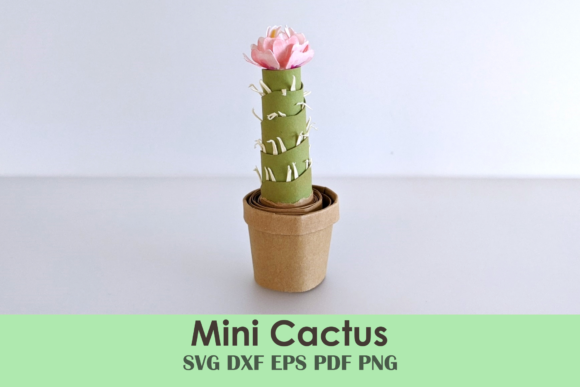
The true test of any 3D SVG or vector file is its adaptability. During my evaluation, I explored how this template could be repurposed across various product categories. The item specifications note that the plant measures approximately 2.5 by 0.75 inches, with the planter at 1 by 1 inch, but the scalable nature of the file allows for significant flexibility. Here is how I envision using this asset in a live shop environment:
- Printable Wall Art: By scaling the design up and pairing it with minimalist typography, it becomes an instant bestseller for nursery prints or office decor. The clean lines ensure high-quality printing even at larger sizes.
- Sticker Designs: The compact dimensions make it ideal for planner stickers and laptop decals. When converted to a PNG with a transparent background, it retains its crisp edges, which is essential for die-cut sticker production.
- Sublimation Design: For mug designs and tumbler wraps, the cactus serves as a perfect accent piece. It can be repeated to create a seamless pattern or used as a standalone focal point on a white ceramic mug.
- Cricut Projects: As a 3D SVG, this file is particularly valuable for crafters who use cutting machines. The layered structure allows users to create physical depth, turning a flat piece of cardstock into a dimensional Paper Flowers arrangement. This adds perceived value to digital downloads, as customers feel they are buying a complex project rather than a simple image.
- Canva Templates: Integrating this illustration into invitation templates or social media graphics adds a custom touch that pre-made elements often lack. It helps small business owners maintain visual consistency across their marketing materials.
Enhancing Product Presentation
In the competitive landscape of creative marketplaces, your thumbnail is your storefront. The Mini Flowering Cactus Template DIY excels in product presentation because it is visually distinct even at small sizes. When creating listing images, I found that the design holds up well against both light and dark backgrounds, provided there is sufficient contrast. This versatility allows for dynamic mockup previews that catch the eye during scrolling.
Furthermore, this asset supports effective visual storytelling. By showcasing the cactus in various contexts—such as on a tote bag, as part of a scrapbooking kit, or framed on a wall—you demonstrate the value of the digital download. This strategy not only improves click-through potential but also reduces customer confusion regarding what they are purchasing. A well-presented graphic design asset communicates quality before the customer even reads the description.
Strategic Placement and Cautionary Notes
While the design is robust, it is not without its limitations. Understanding where to use this asset is just as important as knowing how to use it. The design works best in layouts that allow it to breathe. Large product previews, themed bundles, and decorative layouts highlight its strengths. However, caution is advised when applying it to tiny sticker details or overly complex compositions. If the design is scaled down too far, the delicate flowering details may become indistinct, especially in low-resolution print products.
Additionally, sellers should be mindful of background choices. While the design is versatile, placing it on busy patterns or dark backgrounds without proper adjustment can weaken the contrast, making the cut lines difficult to see for Cricut or Silhouette users. For text-heavy templates, ensure the cactus does not compete with the copy. Visual hierarchy is key; the illustration should complement the message, not overwhelm it.
Practical Seller Notes for Implementation
Before publishing any listing featuring the Mini Flowering Cactus Template DIY, I recommend a rigorous testing phase. Here are the critical steps I take with every new asset:
- Test on Real Mockups: Do not rely solely on digital renderings. Print the design on actual paper or sublimation blanks to check color accuracy and scale.
- Inspect SVG Cut Quality: Open the file in your preferred cutting software. Ensure that the paths are closed and that there are no unnecessary anchor points that could cause cutting errors.
- Verify PNG Transparency: If offering raster versions, confirm that the background is truly transparent and that the edges are anti-aliased for a professional look.
- Font Pairing: Experiment with different typography styles. I found that pairing this cactus with a clean sans serif font enhances its modern appeal, while a handwritten font adds a personal, rustic touch. Avoid overly ornate display fonts that might clash with the simplicity of the plant.
- License Confirmation: Always double-check the commercial license terms. Ensure you have the right to use the asset in finished products for sale, such as t-shirt designs or printable decor.
Organizing your files clearly is also part of the customer experience. Include README files with sizing guides and tips for scaling. This small effort can significantly reduce customer support inquiries and increase positive reviews.
Final Verdict for Digital Entrepreneurs
The Mini Flowering Cactus Template DIY is a solid addition to any digital seller’s library. It is not just a pretty picture; it is a functional tool for creating diverse revenue streams. Whether you are building a seasonal bundle for spring, designing a line of eco-friendly tote bags, or creating engaging social media graphics, this asset delivers consistent results. Its ability to transition smoothly from a 3D SVG craft project to a flat PNG design for sublimation makes it a cost-effective choice for small business branding.
For those looking to expand their catalog with high-quality, versatile illustrations, this cactus template offers a reliable foundation. By testing it thoroughly and presenting it with strategic mockups, you can leverage its charm to build a more professional and profitable online product collection. Remember, the success of a digital product lies not just in the design itself, but in how effectively you integrate it into your broader business strategy.