Reviewing the Crocodile Christmas Candy Holder
As a designer who has spent years translating digital concepts into tangible, stitched realities, I approach every new machine embroidery design with a mix of curiosity and skepticism. We have all been there: downloading a file that looks pristine on screen but turns into a tangled mess of thread breaks and puckering on fabric. Recently, I took a closer look at the Crocodile Christmas Candy Holder, a quirky addition to the holiday season’s visual landscape. While the product description labels it as a 3D SVG template intended for cutting machines and paper crafts, my interest lies in how such a distinct character translates into the world of textile art and commercial embroidery projects.
First Impressions and Visual Personality
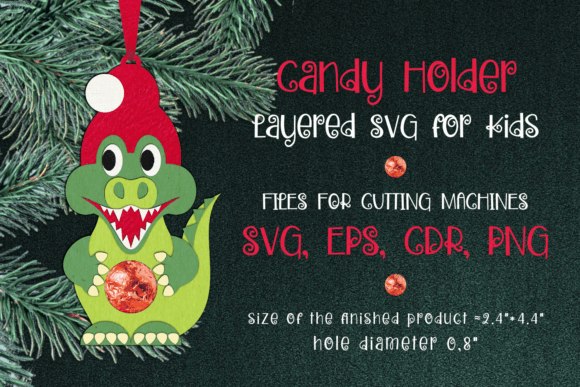
The immediate appeal of the Crocodile Christmas Candy Holder is its whimsical nature. It breaks away from the traditional Santa-and-reindeer monotony that saturates the market every December. The concept of a crocodile holding candy creates a playful, slightly mischievous mood that resonates well with modern consumers looking for something unique. In terms of layout, the design relies on strong, recognizable shapes. For an embroidery designer, this is crucial. Complex, overly detailed illustrations often fail when scaled down, but bold silhouettes tend to hold their integrity regardless of size.
When evaluating this for real-world use, I consider the "stitchability" of the form. A crocodile’s textured skin, if rendered in a digital cut file, suggests a potential for creative stitch interpretation. In embroidery, this could translate beautifully using a combination of satin stitch for smooth outlines and a textured fill stitch to mimic scales. However, since this specific product is marketed as a paper ornament template, one must exercise caution. You cannot simply import a vector cut path into embroidery software and expect magic. The transition from a rigid paper structure to flexible fabric requires a thoughtful redesign of the internal geometry.
Real-World Application Scenarios
Let’s imagine a practical scenario. You run a small Etsy shop specializing in personalized children’s apparel. A client requests a custom sweatshirt for their son who loves reptiles and Christmas. This is where the Crocodile Christmas Candy Holder concept shines. Instead of a generic snowflake, you offer a custom embroidered patch featuring this character. The result is a personalized gift that stands out in a crowded feed.
For custom apparel, such as a heavy cotton sweatshirt, the design would need to be simplified. The "candy holder" aspect might need to be stylized into a pocket or a held object, ensuring that the stitch density does not become too high, which would cause the fabric to pucker. On a tote bag design, made from canvas or denim, you have more freedom. These fabrics can handle higher density and larger hoop sizes, allowing for more intricate detailing in the crocodile’s expression and the candy elements.
Consider also the realm of embroidered patches. If you digitize this character for an iron-on or sew-on patch, you can use a thick cut-away stabilizer to support dense stitching. This makes the design durable and vibrant, perfect for adding to jackets or backpacks. The contrast between the green tones of the crocodile and the reds and whites of the Christmas candy creates a visually striking composition that draws the eye immediately.
Navigating Technical Challenges
While the aesthetic is charming, there are technical hurdles to address before committing to a full production run. Since the source file is a 3D SVG meant for cutting, it lacks the inherent stitch data required for embroidery machines. You must digitize it from scratch or adapt it significantly. One major concern is the scale. If you attempt to stitch this on a small item, like a baby onesie, the details may get lost. Tiny lettering or intricate corners in the original vector file might need to be removed or enlarged to ensure stitching clarity.
Fabric choice plays a pivotal role here. On stretchy fabric like jersey knit, a dense design can cause distortion. I always recommend testing the design on scrap fabric first. Use a tear-away stabilizer for woven fabrics and a cut-away for knits. Additionally, consider the thread colors. A dark green crocodile on a black hoodie will vanish. You must ensure sufficient contrast, perhaps by adding a white or light-colored border around the design to make it pop against dark backgrounds.
Curved surfaces, such as caps, present another challenge. The flat nature of a 2D embroidery design must conform to the curve of a hat. If the Crocodile Christmas Candy Holder is too wide, it will warp. In such cases, splitting the design or reducing its width while maintaining height is necessary to preserve the visual integrity of the finished product.
Commercial Value and Brand Consistency
For Etsy sellers and craft business owners, uniqueness drives sales. Using a distinctive character like this can help establish brand consistency. If your shop focuses on quirky, non-traditional holiday items, this design fits perfectly. It enhances the perceived value of the handmade product because it feels bespoke rather than mass-produced.
However, professionalism is key. Before listing any item featuring this design, you must confirm the licensing terms. The product description states it is a DIGITAL PRODUCT for cutting machines. It does not explicitly grant commercial embroidery rights. Always contact the creator or check the license file to ensure you are allowed to sell physical items made with this design. Selling unauthorized derivatives can harm your reputation and lead to legal issues.
Moreover, presentation matters. When creating printable mockups or product photos, show the design in context. Photograph the embroidered crocodile on a cozy blanket or a festive apron. This helps buyers visualize the holiday embroidery in their own homes, increasing buyer engagement and trust.
Practical Designer Notes for Execution
To successfully integrate the Crocodile Christmas Candy Holder into your workflow, follow these practical steps:
- Digitize with Care: Do not assume auto-digitizing will work. Manually set stitch angles to follow the contours of the crocodile’s body for a professional look.
- Test Stitch Density: Run a test on similar fabric to your final product. Check for thread breaks and adjust tension if necessary.
- Check Hoop Size: Ensure your machine’s hoop can accommodate the full design without re-hooping, which can cause alignment errors.
- Contrast is King: Use high-contrast thread colors. A bright red candy against a deep green crocodile ensures the design reads clearly from a distance.
- Verify Licensing: Confirm whether the digital embroidery file or the original SVG allows for commercial use of finished goods.
- Mockup Testing: Create black and white mockups to check if the design holds its shape without color reliance. If it looks muddy in grayscale, it needs simplification.
In conclusion, the Crocodile Christmas Candy Holder offers a fresh, fun alternative to standard holiday motifs. While it originates as a cut-file template, its potential in embroidery is significant if approached with technical precision. By respecting the limitations of fabric and thread, and by prioritizing clean digitization, you can transform this playful concept into a standout small shop product. Whether for a baby embroidery project or a bold sweatshirt embroidery statement, this design invites creativity and demands attention, making it a valuable asset for the thoughtful designer.